Short answer
Plan shore diving with appropriate training, equipment and local orientation. Check access and closures. Also schedule the last dive before your flight: DAN lists minimum intervals of 12 hours after one recreational no-decompression dive and 18 hours after repetitive dives. These minimums provide no medical guarantee.
A shore dive is still a dive
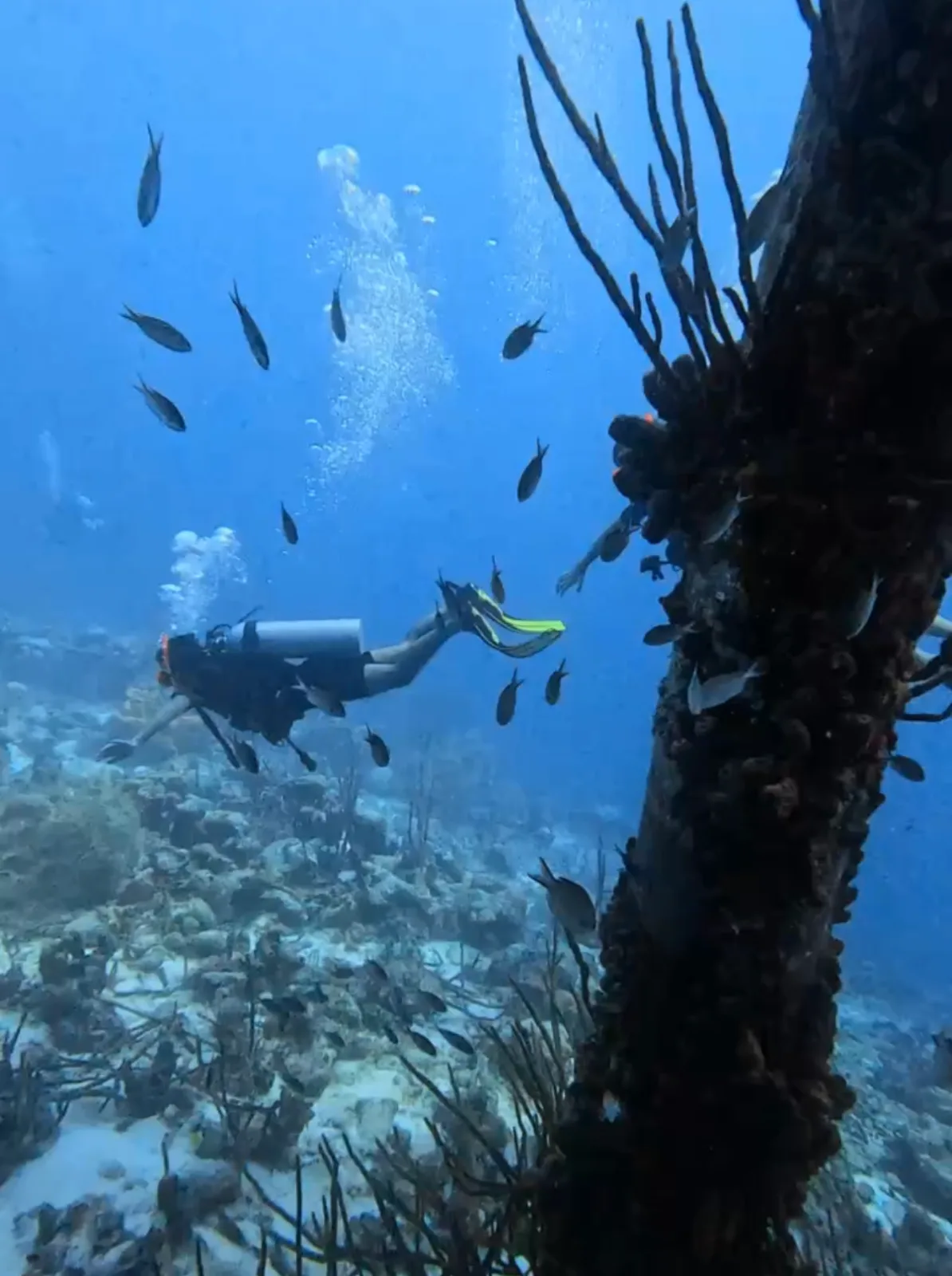
Road access does not automatically make a dive easy. Appropriate training, equipment and a dive plan remain necessary. Arrange STINAPA's required orientation dive and discuss suitable locations with your dive provider. Check entrance, exit, carrying distance and temporary closures.
Do not choose only by a famous name. Hilma Hooker is primarily a diving site; do not expect a complete view of the wreck from the surface. Discuss wreck diving separately with a qualified provider rather than improvising a descent while snorkeling.
Work backward from your flight
DAN recommends at least 12 hours after one recreational no-decompression dive and at least 18 hours after repetitive dives or several diving days. These are minimum intervals and do not guarantee prevention of decompression sickness. Decompression dives or symptoms require separate expert advice.
Have your dive provider assess the schedule and leave sufficient margin. Bring drinking water, food and a comfortable resting place between dives, but do not confuse comfort with medical fitness to dive again. If symptoms develop after diving, seek help instead of continuing to another dive or flight.
More information: DAN.
Last checked on 19-11-2026
More questions about Snorkeling and underwater →Was this helpful?
Question not listed?
Ask us on WhatsApp