Short answer
Do not touch the reef, feed animals or remove natural materials. Check current STINAPA rules for your activity and equipment. Yellow stones identify dive sites but do not guarantee safe entry. Fishing, equipment disinfection and closed zones need separate checks; snorkeling access is not general permission.
A yellow stone is a landmark
Yellow roadside stones help identify a dive location. They are not safety certification for its water entry and do not explain temporary restrictions. Inspect access, read signs and check current STINAPA information before unloading equipment.
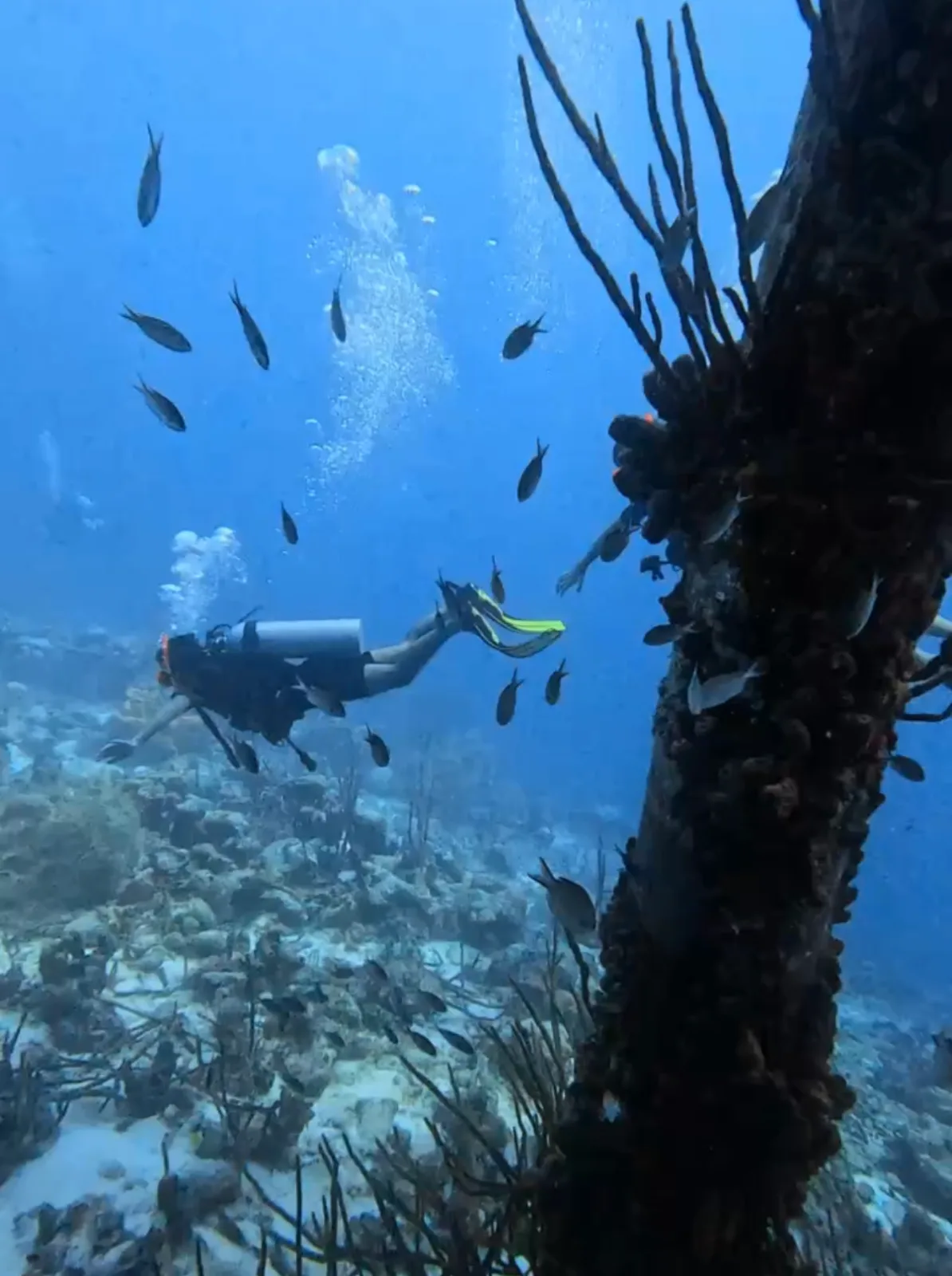
Stay clear of the seabed in the water and do not touch living coral. Footwear or gloves do not make contact harmless. Avoid feeding fish and leave natural materials in place. Taking a shell or coral fragment is not necessary to enjoy the location.
Protect the reef through equipment care
Follow STINAPA's current equipment cleaning and disinfection instructions. Do not invent chemical mixtures: the appropriate method also depends on the material. Coral bleaching and coral disease are different conditions; a white patch is not an invitation to treat or break off anything yourself.
If you want to fish, check the separate rules for zones, species and equipment first. Permission to swim or snorkel is not a general fishing permit. On land, keep parking and access routes clear and avoid vulnerable vegetation and sand where animals may nest.
More information: STINAPA Marine Park.
Last checked on 19-11-2026
More questions about Snorkeling and underwater →Was this helpful?
Question not listed?
Ask us on WhatsApp