Eten op Bonaire: Een gids voor lokale smaken en verse vangst
The scent of the sea, the flavours of the island
Grilled fish by the water, a plate of goat stew in Rincon or a warm pastechi between meals: on Bonaire, food is another way to discover the island. Bonairean cuisine brings together Caribbean flavours and a variety of cultural influences. You’ll find casual eateries serving traditional dishes, food trucks for a relaxed lunch and restaurants where chefs put their own spin on island cooking.
To explore the local cuisine, look for kuminda krioyo: traditional dishes such as stews, fish and funchi. Eating local doesn’t necessarily mean every ingredient was grown or caught on Bonaire. The island’s flavours also come from its recipes, cooking traditions and the people behind the food.
Where to discover Bonairean cuisine
From Kralendijk to Rincon, there are plenty of ways to explore Bonaire’s food culture. Combine a waterfront restaurant with a local eatery and lunch at a food truck. Along the way, you’ll discover both traditional dishes and the island’s international dining scene.
Waterfront restaurants: ask about locally caught fish
In and around Kralendijk, several restaurants offer dining with sea views. Some have waterfront terraces, while others are right on the beach. Options range from a simple fish lunch to a leisurely dinner.
You may see wahoo, tuna, snapper or mahi-mahi on the menu. Availability and origin vary by restaurant and by day. Ask which fish was caught locally and how the kitchen prepares it. The phrase catch of the day doesn’t necessarily mean the fish was caught off Bonaire that morning.
Fish may be served with rice, fried plantain or funchi. Funchi is a firm cornmeal side dish, similar to polenta. The combination of fish, simple sides and a sea view makes a waterfront lunch or dinner a memorable part of many visitors’ stay.
Local eateries: an introduction to kuminda krioyo
For traditional Bonairean dishes, try local restaurants and some snèks in places such as Kralendijk and Rincon. A snèk is a casual spot for food and drinks, but menus vary: not every snèk serves traditional meals. Ask specifically about kuminda krioyo or check the daily menu.
One well-known dish is kabritu stobá: goat meat slowly stewed with seasonings and other flavourful ingredients. Beef stews are also served. Recipes and side dishes differ from kitchen to kitchen, so it’s worth trying more than one place.
Another dish you may come across is keshi yená, a baked dish combining cheese with a savoury, seasoned filling, often including chicken, vegetables and raisins. Traditionally, it can be made using a hollowed-out cheese, but versions made with slices of cheese are also common. Don’t expect the same shape or presentation everywhere.
Fancy something smaller? Try a pastechi: a deep-fried pastry with a filling such as cheese, chicken or meat. Enjoy one for breakfast, as a snack or as part of a simple lunch.
Food trucks: relaxed outdoor eating
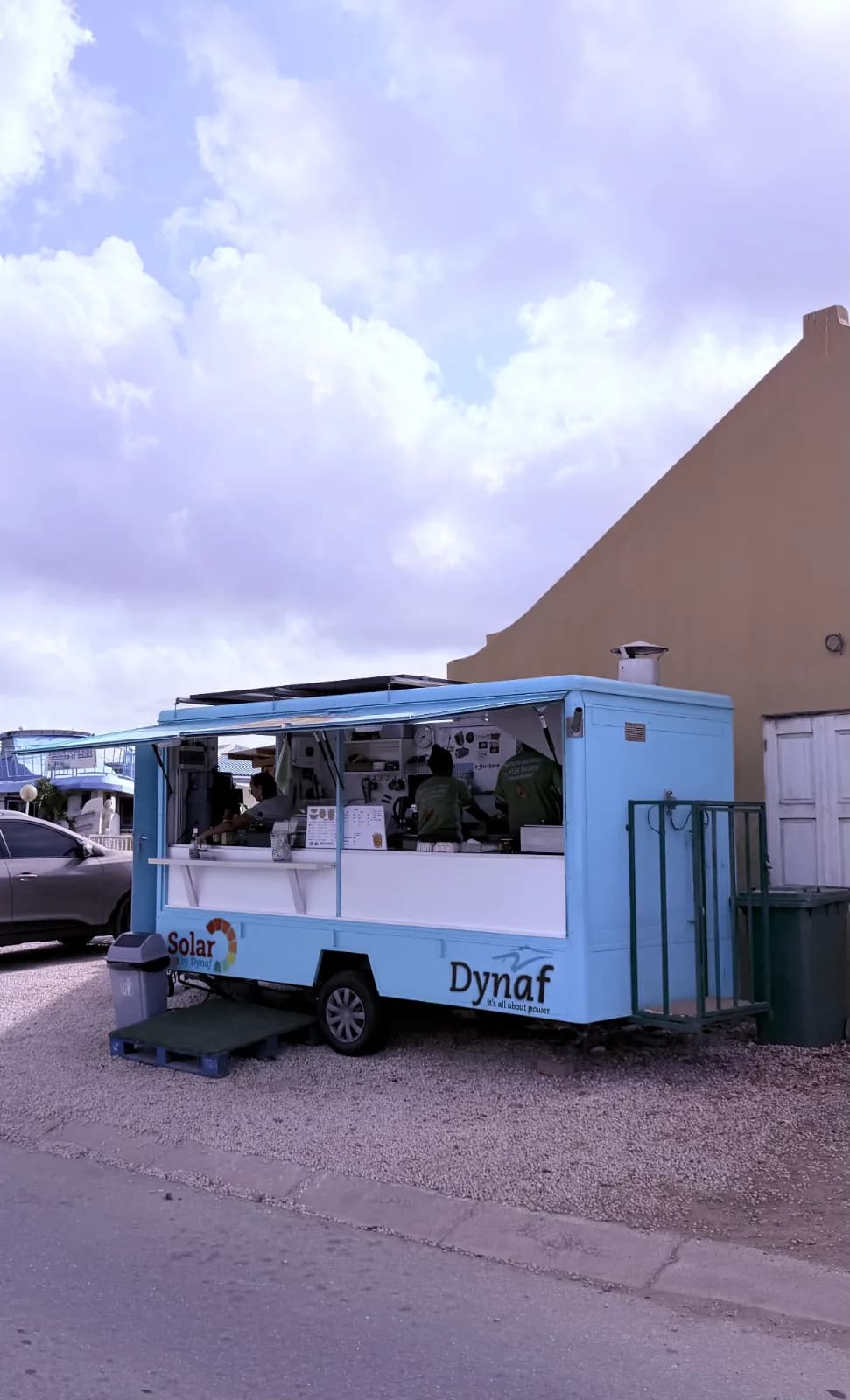
Food trucks are also part of Bonaire’s dining scene. You’ll find them near beaches and along main roads, serving everything from fish dishes and wraps to burgers and other international favourites.
A food truck can be a welcome stop during a beach day or after snorkelling. Seating varies by location: some have chairs or picnic tables, while others offer takeaway food. Shade isn’t always available, and you may have to wait during busy periods.
Check the operator’s current location and opening hours before heading out. If you’re curious about the ingredients, ask whether the fish was caught locally or the fruit was grown on the island. Tropical flavours don’t automatically mean local ingredients.
Practical tips for eating on Bonaire
-
Ask about the fish and where it comes from. Find out which species are available, whether they were caught locally and how they’re prepared. That gives you more to go on than the menu description alone.
-
Try a traditional dish. Goat stew, funchi or keshi yená make a good introduction to krioyo cooking. Ask what’s being served that day and which side dishes come with it.
-
Carry some cash in US dollars. The US dollar is Bonaire’s official currency. Smaller eateries and food trucks may not accept debit or credit cards. Small bills are useful.
-
Put together a beach lunch. Pick up some pastechi from a bakery or local eatery and pack a cooler with fruit, drinking water and other refreshments. Keep perishable food chilled and take all your rubbish with you.
-
Discover a drink made on Bonaire. Cadushy of Bonaire is a cactus-and-lime liqueur produced at The Cadushy Distillery in Rincon. Prefer a beer? See what’s on the menu, keeping in mind that beer served on the island isn’t necessarily brewed on Bonaire.
-
Ask for a personal recommendation. Ask your host, a restaurant owner or someone who lives on the island where they like to eat. Tell them what you’re looking for: a traditional lunch, a vegetarian dish, fresh fish or a simple breakfast.
-
Check opening hours and book when needed. Opening days and daily menus can vary, particularly at smaller establishments. If you want to eat at a popular restaurant at a specific time, booking ahead is a good idea.
The flavour of Bonaire lies in its variety
Bonaire’s food culture can’t be captured in a single dish or type of restaurant. Traditional recipes sit alongside international cuisines and fresh ideas from chefs and entrepreneurs. That variety is what makes exploring the island’s food so rewarding.
Take your time over a plate of stobá, try funchi with your fish and pick up a pastechi from somewhere recommended to you. Whether you’re having a simple lunch or settling in for a full evening meal, eating at different local businesses reveals another side of Bonaire.